
Billerica City Directory Holdings
Billerica's directory evidence is scattered by format and date. The Local History Room keeps phone books, street lists, voter-registration lists, town documents, newspapers, maps, yearbooks, genealogies, and related material in addition to printed reference works. A directory should be logged as a distinct item, with its publisher, year, page, town heading, and the kind of entry it contains. That practice matters because an alphabetical listing, a street list, and a town-office section answer different questions even when the same surname appears in each.
| Collection | Years | Where Held | Access |
|---|---|---|---|
| Local History Room directories, phone books, and street lists | Varies by item | Billerica Public Library Local History Room | Room use; materials do not circulate |
| Lowell suburban directory | 1896 | Digitized through the Boston Public Library and partner-library ecosystem | Online scan |
| Massachusetts city and town directory holdings | Selected years; coverage is uneven | Massachusetts State Library and other repositories | Confirm the precise title and year |
| Annual reports, yearbooks, cemetery catalogs, and local histories | Varies by collection | Billerica Library virtual collections and Local History Room | Mixed digital and room access |
The 1896 volume is a firm early lead, not proof of a complete annual series. Its title identifies alphabetical inhabitants and businesses along with streets, town offices, societies, churches, and miscellaneous material for Billerica and nearby towns. The research confirmed the scan and its metadata, but not a reliable Billerica sample-entry page. Preserve that gap rather than copying an unverified entry from a text extraction.
Billerica Local History Room
The Billerica Public Library Local History Room at 15 Concord Road is the practical first stop for local print and microfilm work. The library lists 978-671-0948 for local-history questions. Its policy posts Monday through Thursday hours of 9:00 a.m. to 9:00 p.m., Friday 9:00 a.m. to 5:00 p.m., and Saturday 9:00 a.m. to 1:00 p.m.; it is closed Sunday. Check current hours before a visit. The room's scope includes families, early settlers, education, government, development, and local events, so a directory search can be paired with the material that helps identify the right household.
The Local History Room policy shows the access rules that govern this kind of Billerica city directory research.
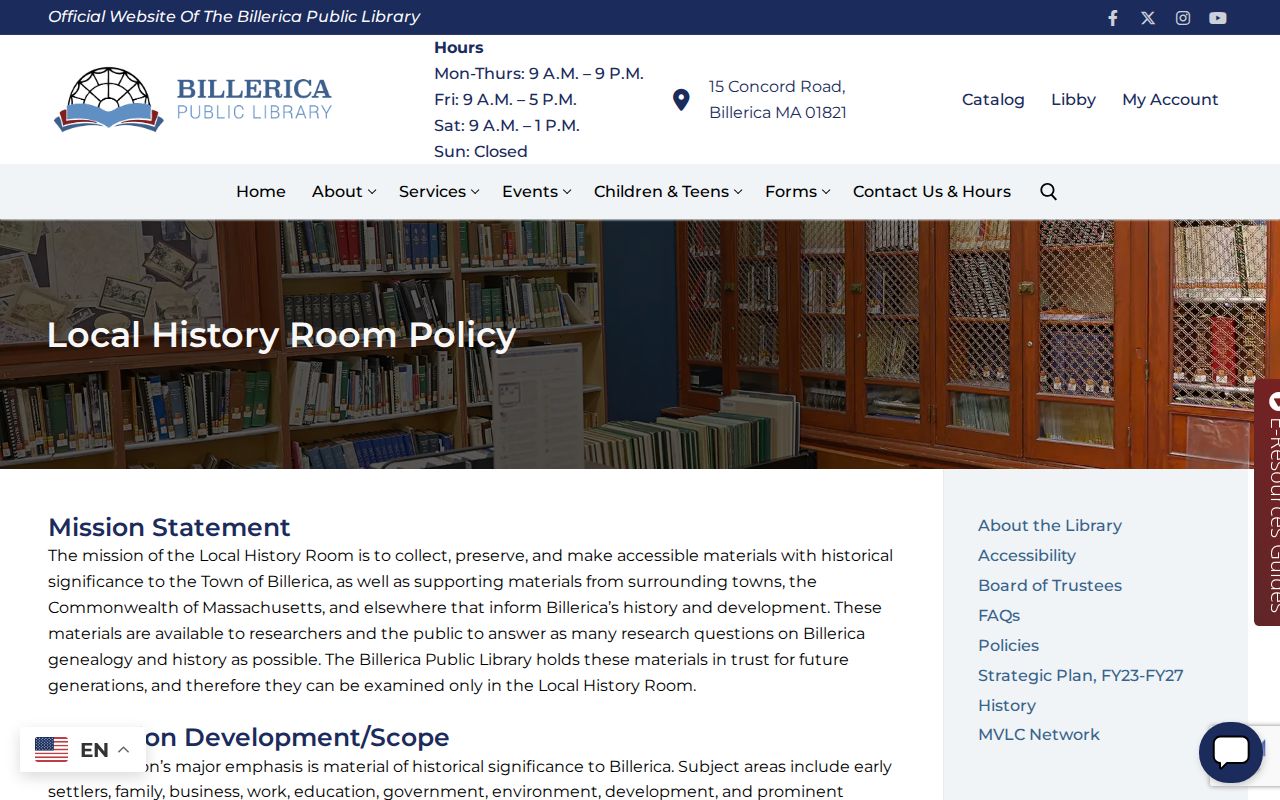
Local-history items stay in the room. Rare materials require an appointment with the Local History Librarian, including contact information and identification. Researchers use one item at a time, use pencils, and arrange microfilm-reader use by appointment. Smartphone scanning is subject to copyright and permission. Those rules are part of the record trail, especially when a page image or notation needs to be checked again.
Reading a Billerica City Directory
Read each printed listing at the level it was made. The 1896 Lowell suburban directory promises separate kinds of material, including inhabitants, businesses, streets, offices, societies, and churches. It does not establish that every name denotes a household or that a listed address remained accurate outside that volume's year. If an address is absent, leave it absent. A later map or modern database should not be used to silently fill the blank.
| Title page | Record the directory title, publisher, and year before interpreting an entry. |
|---|---|
| Town heading | Confirm that the listing is under Billerica rather than another town covered by the same volume. |
| Entry type | Identify whether the line refers to an inhabitant, business, office, society, church, or another category. |
| Printed name | Copy the spelling exactly, including initials or other distinctions that can separate similar names. |
| Page and address | Capture the page and any address exactly as printed, while retaining an omission when the book gives none. |
- Directory entry
- A printed listing tied to the arrangement and purpose of one volume, not a universal record of every resident.
- Street list
- A list organized by street rather than surname; it can supply a second address key when the collection includes one.
- Finding aid
- A description that helps locate a collection or file. It points to material but is not the material itself.
- Contemporaneous record
- A record created close to the period being studied, such as a directory, yearbook, town report, deed, or census.
Billerica Directory Companion Sources
When a directory produces a good lead, the library's virtual collections can add the context needed to test it. Digitized annual reports are available through Internet Archive, while Billerica by the Book gathers local histories and genealogical works. Digital cemetery catalogs and photographs, historic-district material, maps, the Mitchell Boys School collection, and digitized yearbooks add evidence that a printed directory may not contain. The yearbook run identified in the research reaches from the 1937 Howe High School volume to the 2020 BMHS Warrior, with older Howe catalogs from 1880 and 1897.
Billerica Historical Society is the manifest source for this local-collections view.
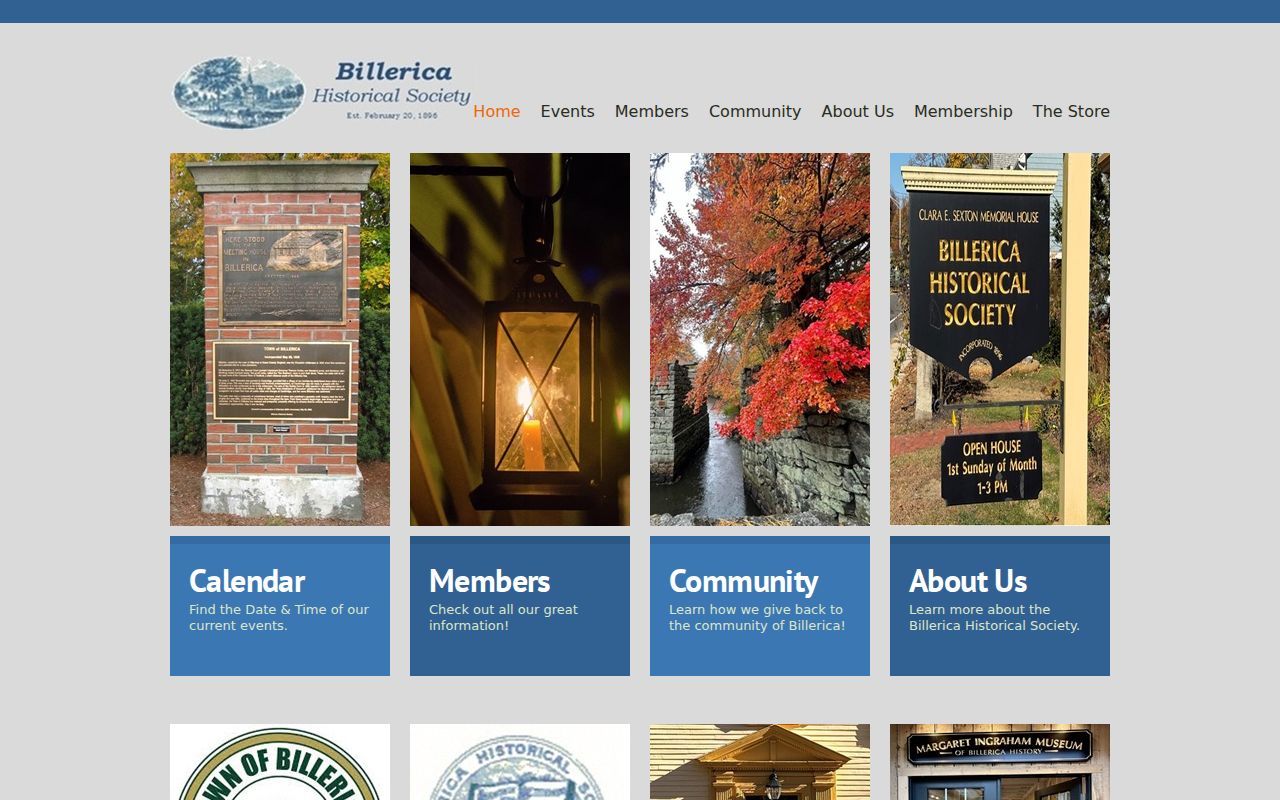
The society source is a collection contact, not proof of a household fact. A school record can support a class-year connection, and a cemetery catalog can support burial research. Neither should be used to claim a present residence. The Billerica Garden Suburb item also describes the 1914 planned-development story and Warren Manning's role, a useful place-history lead that must still be tested against a dated record.
Billerica City Directory Research Steps
A household trail works best when it has more than one source. Use the name, year, and town heading to find the earliest reliable printed appearance, then compare the next relevant item rather than assuming a continuous run. State Library holdings are uneven by publisher and year, so an unlisted year is a collection question before it becomes a family conclusion. For a current-record question arising from an older directory, use the distinct verification tools in the Billerica resident lookup resources.
- Write down the exact surname spelling, directory title, year, page, and Billerica heading from the first reliable entry.
- Check a later or earlier available volume, keeping any change in spelling, category, or printed address in the log.
- Use a street list, voter list, yearbook, cemetery catalog, town report, or newspaper only for the particular question it can answer.
- Test a name-and-address match with a contemporaneous deed, vital record, census, or other custodian record when the purpose requires confirmation.
- Record missing years and negative results as gaps in coverage, not proof that a person departed or died.
A disappeared listing can reflect a move, a change in editorial practice, a business-only listing, an unscanned year, or a simple omission. Pairing the item with a date-specific record is safer than guessing which explanation applies. This method also keeps a boarder, organization, and family with the same surname from being merged into one history.
Billerica Directory Years and Change
Billerica's printed and digital shelf sits inside a longer history of record keeping. The library traces the first land grants to 1638 and the town's establishment to 1655. Later mill, canal, railroad, trolley, lake-cottage, and postwar development created different address conventions and different kinds of source material. A directory address, a yearbook, and a deed can all be useful, but they were created for different administrative purposes.
| 1638 | The library's Great Deed history traces the first land grants to this year. |
|---|---|
| 1655 | Billerica was established, according to the library's Great Deed history. |
| 1896 | Henry M. Meek's Lowell suburban directory documented Billerica with nearby towns. |
| 1912–1914 | The Billerica periodical offers another dated local-history source. |
| 2019 | Community Preservation funds supported conservation of the Great Deed. |
Billerica Historical Society Files
The Billerica Historical Society adds the artifact and family-file layer that a city directory cannot supply. Its Clara Sexton House, circa 1723, is described by the Cambridge Historical Society archival guide as a house museum and public repository for local material culture. The guide reports artifacts, genealogies, and documents. It also says that about half the collection was processed, print finding aids were available, and early-days and family finding aids were expanding. An absent web result therefore does not show that the society has no material.
The Billerica archival-resources guide documents the collection context for the Clara Sexton House.
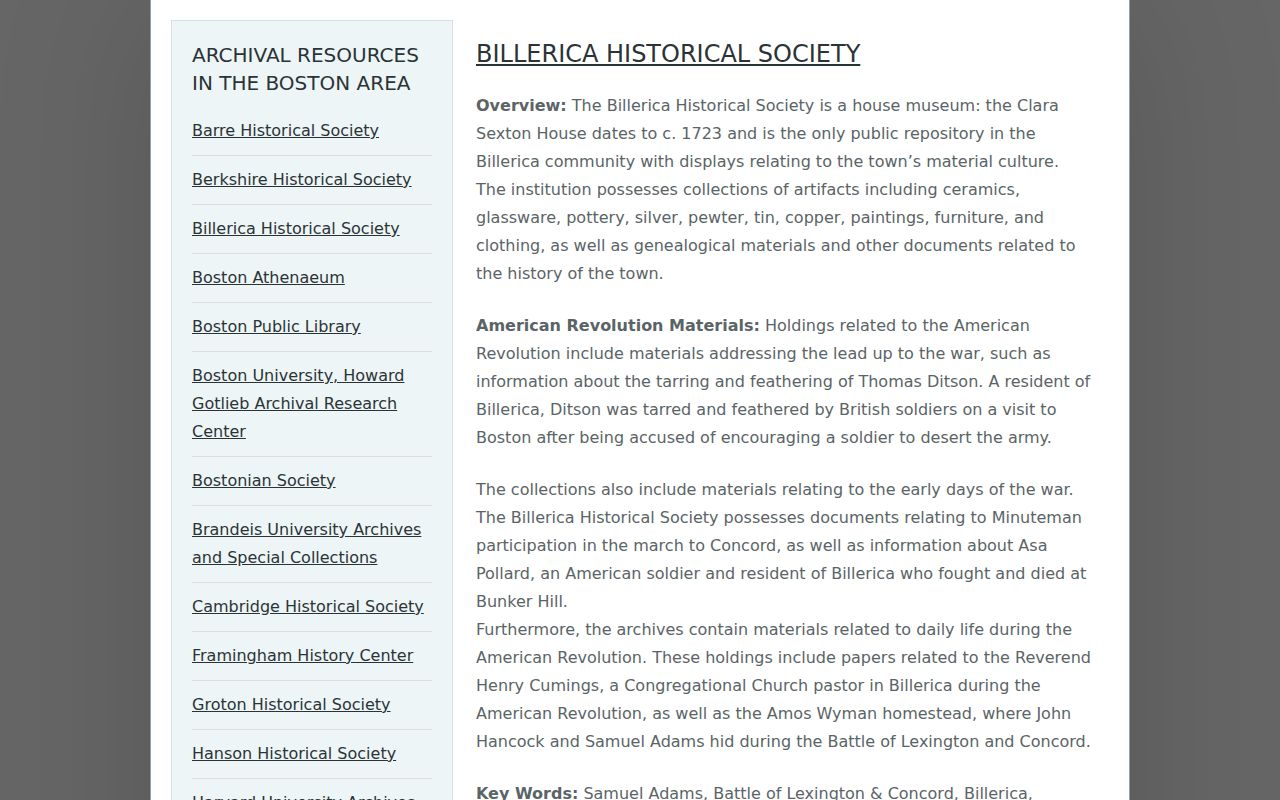
Ask the society about a named family, collection, public exhibit, or appointment rather than assuming a private list exists. Materials are generally not loaned. Confirm current appointment and copying rules directly with the Historical Society before planning a visit or relying on an older finding aid.
Billerica City Directory Limits
A Billerica city directory can place a printed name in a historical context. It cannot prove present residence, ownership, relationship, or the reason a person appeared in a listing. A person might be named as a business contact, a boarder, an officeholder, or a member of an organization. Historical district inventories can provide a construction-era clue or a historic name, but they are not title records, and Billerica says many older inventory forms were compiled in the 1970s and early 1980s.
For a house-history question, compare the directory with the town's Historic Preservation resources, MACRIS, library maps, and the Middlesex North Registry deed chain. Keep the page image or collection citation with each conclusion. That makes a later correction possible and preserves the difference between a useful historical lead and a verified fact.